
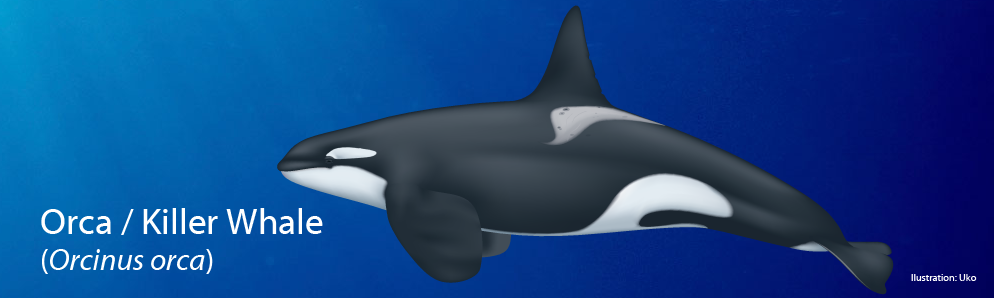
Monterey Bay Season: Year-Round
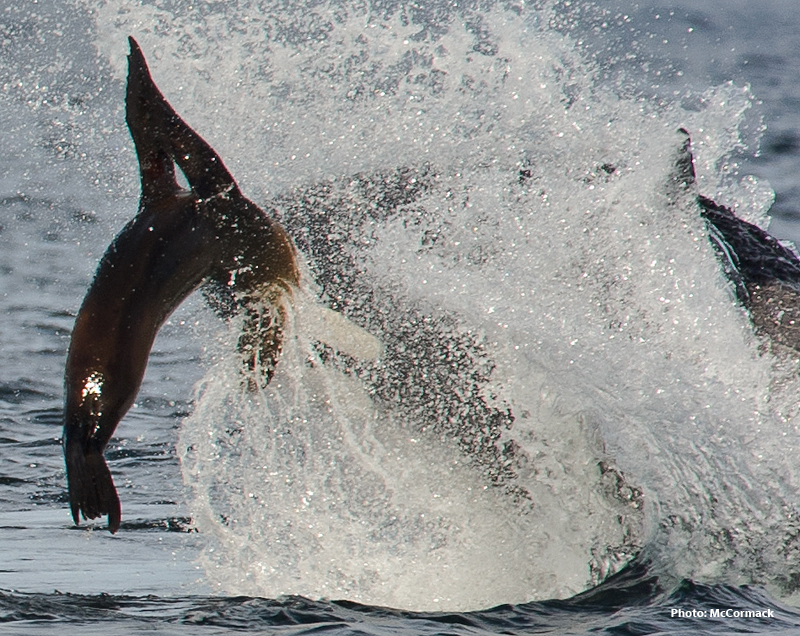
The Orcas, or Killer Whales, that frequent Monterey Bay are known as "transients". This type of Orca roams the California coastal waters far and wide in search of other marine mammals (seals, dolphins and whales) to prey upon. April is our best month to spot Orcas in the bay as they hunt for gray whale calves on their northward migration. Orcas can show up at any time of the year and they often put on quite a show. When we locate hunting Orcas, passengers experience the nature observation of a lifetime. It is the "real deal", though difficult to watch, and provides a genuine understanding of these marvelous animals' role as the apex predator of our ocean. Often after a successful hunt, Orcas are downright playful, leaping out of the water and splashing up a storm.
"Seeing with Sound": How Dolphins and Orcas Echo-locate
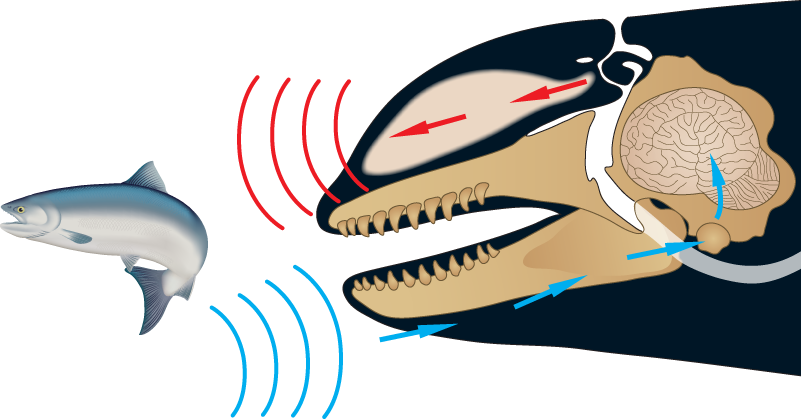
Toothed whales and dolphins are highly evolved to utilize sound to view their watery world. How? They send out high frequency clicks from their specially adapted blowhole. The clicks then pass through the fatty tissue in their bulbous forehead where they are focused outward to scan for prey. These clicks bounce off prey and the echoes are received through the hollow fat-filled lower jawbone leading to the inner ear. Their brains are highly developed to process these echoes into a 3D visualization. Amazing!
Keep Current!
Check out the "Orcanet" orca tracking website for recent Photo Blog and news about orcas from the Pacific Coast.
Conservation Concern: Pollutants in the Ocean
Orcas as an apex predator are one of the most susceptible mammals to bioaccumulation of human-made contaminants. As mammals, we store pollutants in our fatty tissue. As apex predators which feed at the top of the food chain, orcas are consuming chemicals stored in their prey and then concentrating them in their own fat. The levels of PCBs and DDEs in the orca's blubber layer is frightening. This contaminant load will compromise their immune system making them more prone to disease and may lower reproductive success. This is bad news for these marvelous whales. We humans need to clean up our act and our oceans.